📍 Dumfries & Galloway, Scotland | ☎ 07507 123784 | ✉ info@royalgleam.co.uk
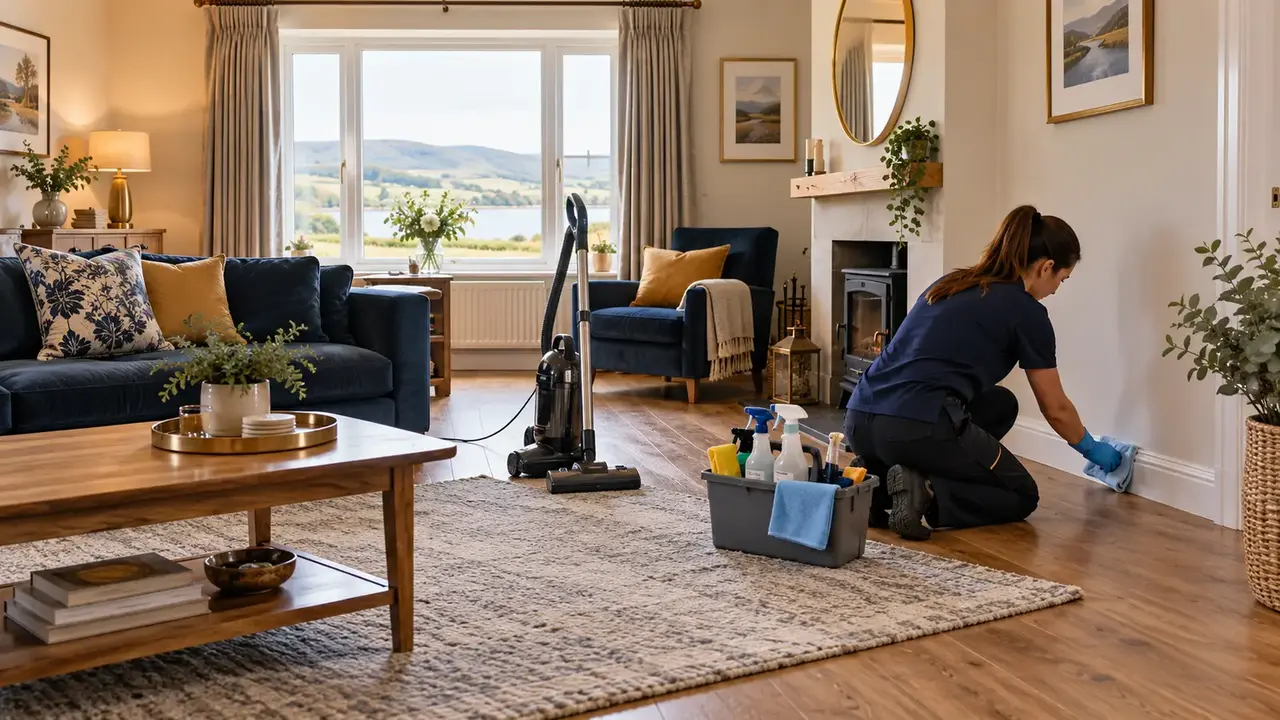

A home deep cleaning checklist gives you a plan for the tasks that everyday cleaning often leaves behind: cupboard fronts, skirting boards, awkward edges and accumulated grease or dust. Start with the rooms that need the most attention, agree the scope, and leave floors until the other work is finished.
Whether you are cleaning yourself or booking help in Dumfries, Thornhill or a nearby community, a room-by-room list makes it easier to describe what you need. This guide is a starting point, not a promise that every task is included in every professional clean.
Regular cleaning or a deep clean?
Regular cleaning maintains the areas you use most: bathrooms, kitchens, surfaces and floors. A deep clean allows more time for detail and accumulated dirt. The difference is the agreed work and the property’s condition, rather than a fixed number of hours or a universal package.
For example, regularly wiping kitchen worktops is different from cleaning cupboard fronts, accessible shelves and greasy edges. A recently cleaned flat may need a focused kitchen and bathroom visit; a larger home with several neglected rooms may need a broader plan.
Prepare before you start
- List priority rooms and the results you want.
- Clear clutter and surfaces so they can be reached.
- Identify delicate materials and check their care instructions.
- Choose products suited to the surface and follow their labels.
- Arrange access, parking and somewhere to keep pets comfortable.
- Identify heavy items, difficult access or tasks requiring separate equipment.
Do not assume furniture moving, carpet extraction, external windows or appliance interiors are included. Discuss these before a booking. Decluttering also differs from cleaning: deciding what to keep is usually best done before the cleaner arrives.
Kitchen deep cleaning checklist
- Dust reachable ledges before cleaning lower surfaces.
- Wipe cupboard fronts, handles and accessible edges.
- Clean emptied internal shelves where agreed.
- Clean worktops, splashbacks, the sink and taps.
- Clean the hob and suitable appliance exteriors.
- Clean the microwave or refrigerator interior where included and prepared.
- Clean doors, frames and skirting boards.
- Vacuum or sweep, then clean the floor.
Oven interiors and substantial grease deposits may need extra time. Natural stone, treated wood and specialist finishes also need appropriate products. Share any surface-care instructions rather than treating every kitchen in the same way.
Bathroom deep cleaning checklist
- Clean the toilet, basin, bath and shower.
- Remove accessible soap residue and suitable limescale deposits.
- Clean screens, mirrors and fittings.
- Wipe storage fronts, shelves and touchpoints.
- Clean reachable floor edges and skirting boards.
- Record obvious leaks, damaged sealant or other maintenance concerns.
A deep clean may improve presentation, but it cannot repair a leaking fitting or replace failed sealant. Persistent surface problems should be assessed separately rather than repeatedly treated as ordinary dirt.
Bedrooms and living areas
- Dust reachable furniture, shelves and ledges.
- Clean mirrors and agreed internal glass.
- Wipe doors, handles and suitable switches.
- Clean skirting boards and accessible radiator surfaces.
- Vacuum carpets, soft-floor edges and agreed upholstery areas.
- Clean suitable hard floors.
- Check beneath accessible lightweight items where agreed.
If you want wardrobes or cupboards cleaned inside, empty them first. Specialist upholstery or carpet treatment should be specified separately from normal vacuuming.
Entrances, stairs and finishing checks
Entrances are easy to overlook when attention is focused on kitchens and bathrooms. Include the hallway, reachable bannisters, stair edges and frequently used door handles in your plan.
When the work is complete, check the priority rooms and compare them with the agreed list. Note any areas that could not be reached or problems requiring maintenance. This is more useful than judging a clean by how strongly a room smells of cleaning products.
Plan the work by zones, not by random tasks
Moving repeatedly between rooms wastes effort and can spread dust back onto finished areas. Divide the home into manageable zones, then work from high surfaces to low surfaces and leave floors until the end. In a two-storey property, it is often practical to complete the upper level first and work towards the exit.
Gather the products and equipment needed for one zone before starting. Keep bathroom cloths and tools separate from kitchen equipment, and change dirty water and cloths regularly. A written sequence is especially helpful when more than one person is cleaning.
Choose products for the surface, not only the stain
A strong product is not automatically the right product. Natural stone, sealed timber, laminate, painted surfaces, stainless steel and delicate fittings may all need different care. Read the manufacturer’s instructions, test unfamiliar products discreetly and never mix cleaning chemicals.
Ventilate the room where appropriate and store products away from children and pets. Royal Gleam uses eco-friendly products where suitable, while still choosing the method according to the surface, condition and required result. “Eco-friendly” should not be treated as permission to ignore instructions or assume a product is harmless.
Make a realistic priority list
If the whole property cannot be completed at once, focus on the areas that affect hygiene, daily use and comfort. A sensible order might be bathrooms, food-preparation surfaces, bedrooms, shared living spaces and then lower-priority storage areas. Your priorities may differ if you are preparing for guests, moving home or dealing with a specific problem.
- Essential: areas that must be usable and hygienic.
- Important: accumulated dust, grease and reachable detail work.
- Optional: tasks that can be scheduled separately without affecting the immediate result.
This prevents a deep clean becoming an endless list with no clear finish point.
Deep cleaning with children, pets or allergies in the home
Tell the cleaner about pets, access needs and known sensitivities before the visit. Arrange a comfortable separate area for animals and keep children away from wet floors, equipment and products. If a household member has a diagnosed allergy or medical requirement, explain the practical restrictions and follow professional medical advice where needed.
Cleaning can reduce accessible dust and debris, but a general cleaning service should not be presented as medical treatment, specialist decontamination, mould remediation or pest control. Those needs may require an appropriately qualified specialist.
When to clean yourself and when to request help
A planned DIY clean may suit a manageable property when you have enough time, suitable equipment and confidence caring for the surfaces. Professional help may be useful when several rooms need detailed attention, the deadline is fixed, access is difficult or you want an agreed result without using your own limited time.
When requesting a quotation, describe the property honestly and provide photographs of priority areas. Mention clutter, heavy deposits, delicate finishes, pets, parking and any task that may require specialist equipment. This gives the provider a better basis for defining the work.
Finish with a calm quality check
When the main work is complete, allow surfaces and floors to dry and inspect each zone in good light. Check that equipment has been removed, products are stored safely and the priority tasks have been completed. Look for streaks, missed edges or items moved from their usual place.
Keep a short note of anything deferred, such as a specialist carpet clean, external windows or maintenance concern. A deep clean works best when it ends with a clear result and a realistic plan for the tasks that remain.
How often does a home need deep cleaning?
There is no single schedule for every household. Pets, occupancy, daily routines, surface materials and the regular cleaning already in place all affect what builds up. Review the tasks that are repeatedly missed and plan additional cleaning around the actual condition of the home.
A deep clean can be useful before starting a regular arrangement, before moving into a property or when preparing for a specific occasion. For a rental handover, use our end-of-tenancy checklist, which includes preparation and handover considerations.
What affects a professional deep-cleaning quote?
Room numbers alone do not describe the work. Tell the cleaner about the size, current condition, priority tasks and access. An occupied home with many belongings can take a different approach from an empty property of the same size.
- Property size and rooms included.
- Current condition and areas needing extra attention.
- Required tasks, including any appliance interiors.
- Surface materials and access restrictions.
- Preferred timing and any completion deadline.
A defined scope helps you compare quotations fairly. Ask what is included and what requires separate assessment, rather than comparing prices for different amounts of work.
Deep cleaning in Dumfries and Thornhill
Royal Gleam provides domestic and deep cleaning planned around the property and your priorities. Dumfries and Thornhill are core service areas, with nearby coverage subject to availability and requirements. See Areas We Cover and include your postcode in the enquiry.
Frequently asked questions
Do I need to tidy before a deep clean?
Clearing belongings gives access to surfaces and floors. Agree any additional organisation work separately.
Does a deep clean include every room?
Only the rooms and tasks agreed in the quotation. A focused clean may cover selected rooms rather than the whole home.
How long will it take?
That depends on the size, condition and scope. Share the details before expecting a reliable time estimate.
Request a home deep-cleaning quote. Tell Royal Gleam your location, priority rooms and preferred timing.